Originally written January 9, 2026.
It’s amazing just how perfectly paced and structured Dr. Strangelove is, never wasting one minute or line of dialogue and allowing each scene and character to take on identities of their own while still forming a cohesive whole.
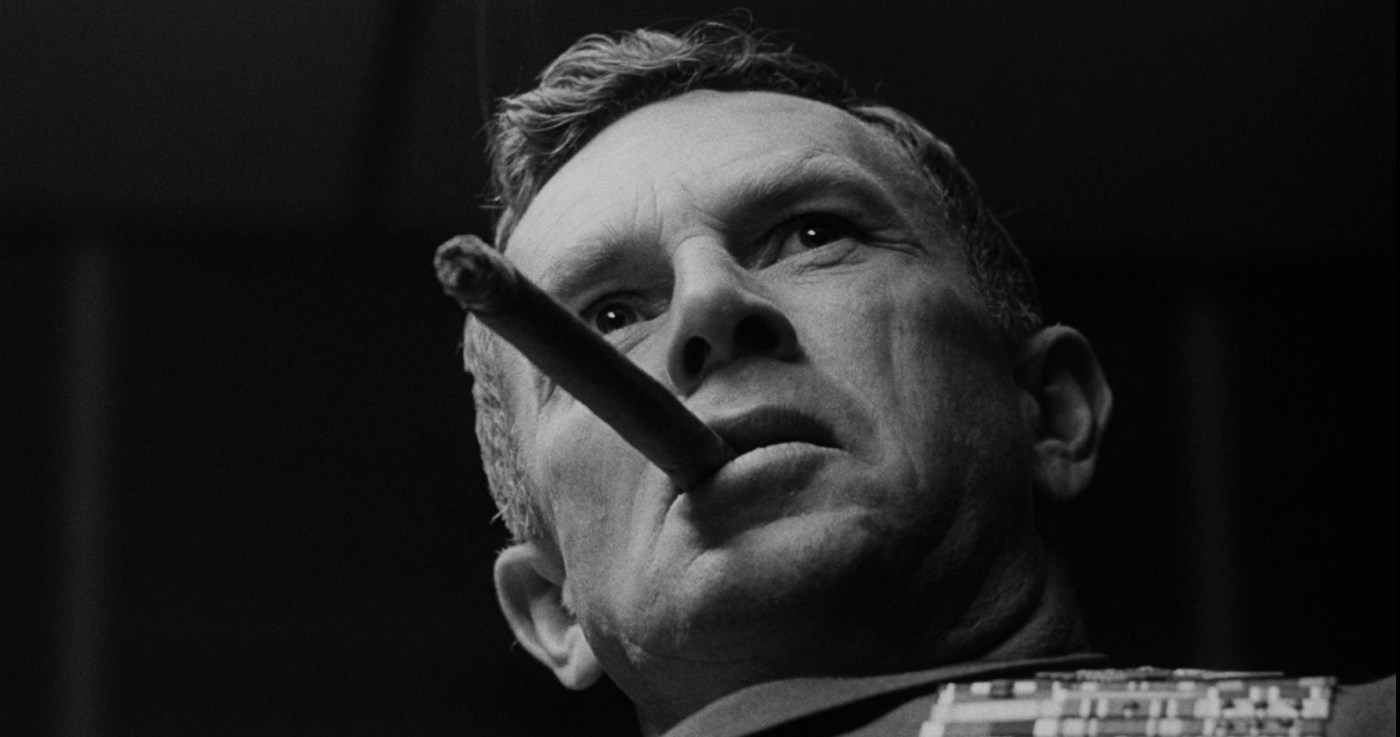
There’s the office of Brigadier General Jack D. Ripper (Sterling Hayden), a noir-ish set where he sits upon his throne of paranoia and initiates a cataclysm in an effort to protect humankind’s bodily fluids from the corruption of communism (!). Ripper is framed in a statuesque manner as he chomps through his cigar to deliver his supposed brilliant insight to an increasingly concerned British RAF exchange officer Lionel Mandrake (Peter Sellers). The degree to which he maintains his composure and conviction even as his office is torn apart by bullets from attacking American troops, defiantly brandishing a Browning machine gun as he continues to spout his insane proclamations, is a level of fortitude that might otherwise convince you of his own divination if it weren’t for his complete insanity.
The interior of the B-52 that barrels through Soviet territory offers a very different environment. It’s a noisy, cramped space, shot with a lot of visceral handheld camera work that helps you to feel every bit of turbulence and shift of the ailerons. Beyond the performances of the crew, which do a good job of making each of them seem like humble followers of orders totally disconnected from the wider global politicking at play, it’s the layering of “When Johnny Comes Marching Home” on top that makes these scenes some of my favorite in the film. There’s a near boyish, adventurous air to this space as the crew rides their steel stallion towards world devastation.
And who can forget Ken Adam’s remarkable design of the War Room, its angular shape featuring an oversized poker table to host discussions, brightly lit by overhead lamps, and the infamous Big Board that stares down at them, tracking the location of the bomber wings about to erroneously end the world. Peter Sellers puts on two more incredible performances here—one as the calm and dignified President Muffley, who must remind the men that fighting in the War Room is woefully inappropriate, and the iconic titular Dr. Strangelove, a German scientist who has become so crazed by his experiences in the Third Reich that his right arm Sieg Heils all on its own. And then there’s George C. Scott as the outrageously comical General Buck Turgidson, for sure one of the greatest performances in all of comedy, whose gum-chewing frankness about the situation with the President is outmatched only by the raw, hysterical enthusiasm he has for establishing and maintaining American superiority over the air space and, later, mine shafts. These scenes, in stark contrast to those inside the B-52, are filmed with wide static shots that allow the set to envelop the screen and place the viewer in the middle of the anxious proceedings.
Some of the best 90 minutes in cinema.
“I’m sorry too, Dimitri… I’m very sorry… Alright, you’re sorrier than I am, but I am as sorry as well… I am as sorry as you are, Dimitri! Don’t say that you’re more sorry than I am, because I’m capable of being just as sorry as you are… So we’re both sorry, alright?”
 Notes from Nate
Leave a comment